Author: Jennifer
Walsall – RicNic Associates with The Royal Air Force Museum
We’re delighted to be working with RAF Museum Midlands through their community grants programme to run our next Ricnic Associates programme.
The Royal Air Force Museum Midlands, located at RAF Cosford, is a free museum dedicated to the history of aviation and the Royal Air Force in particular.
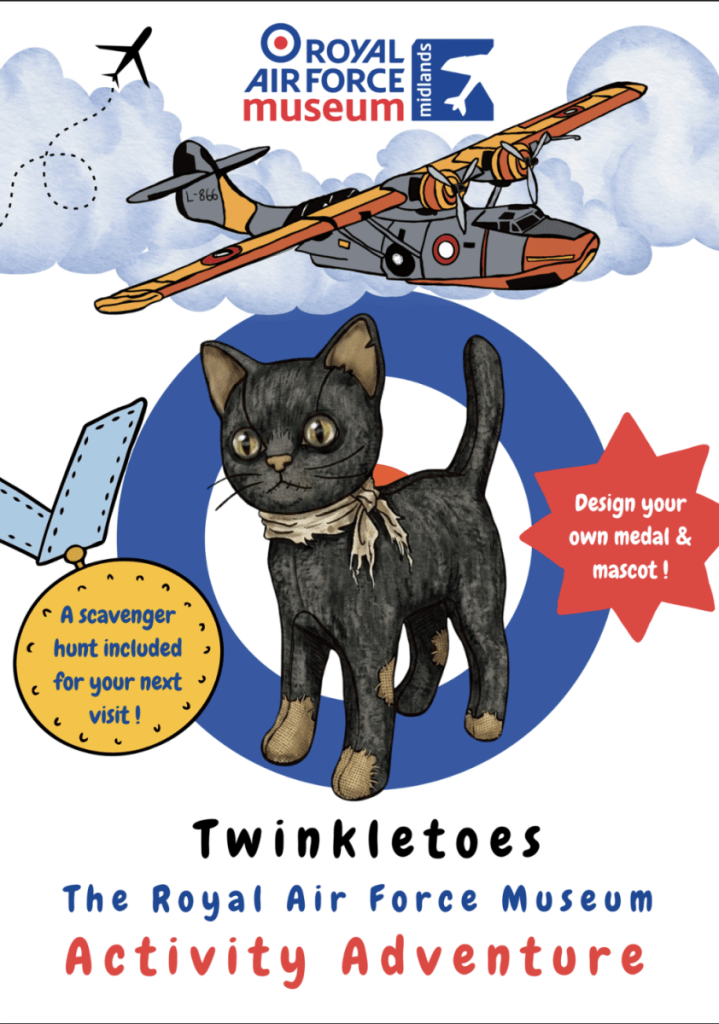
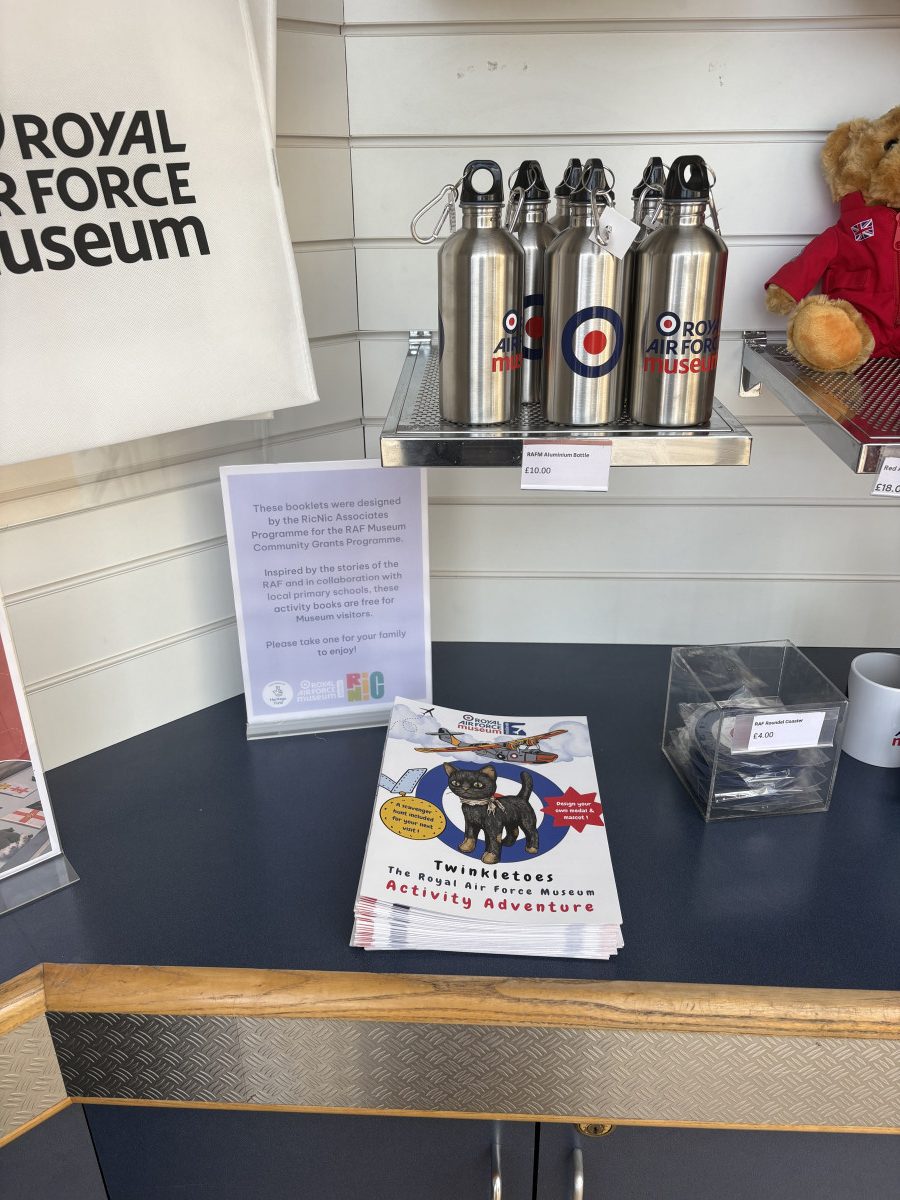
Our RicNic Associates programme supports creative young adults aged 16+ to develop and deliver their own community projects while exploring pathways into creative careers. This year we’ll be running a programme called Flying Colours. You’ll receive mentoring from the RicNic team and will work to a creative brief to produce a children’s colouring and storybook inspired by RAF stories, beginning with the mascot “Twinkletoes” the cat.
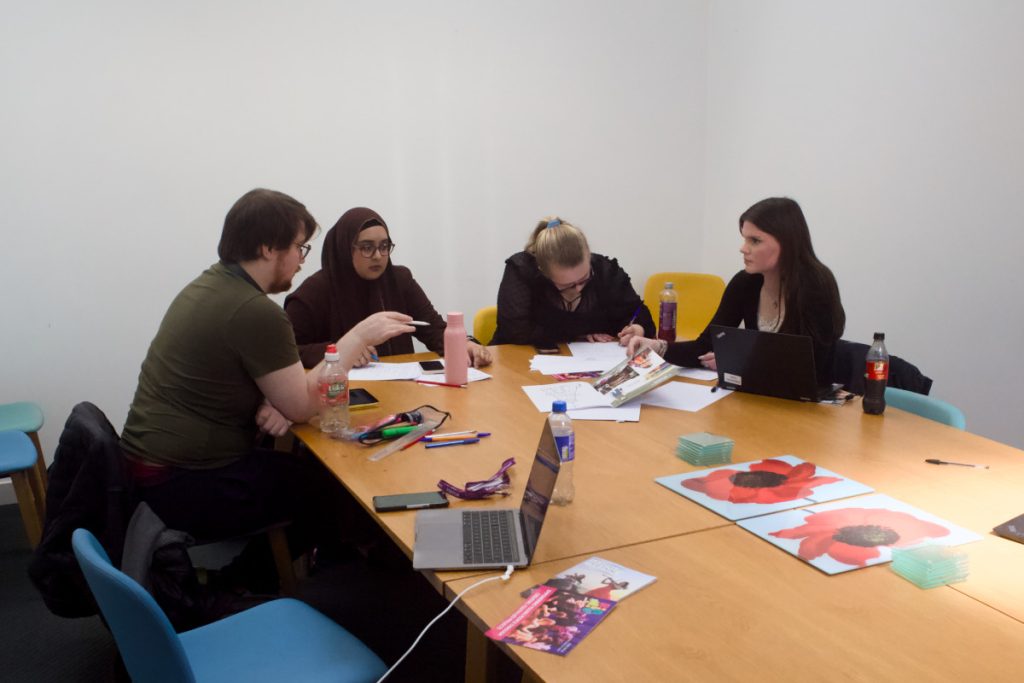
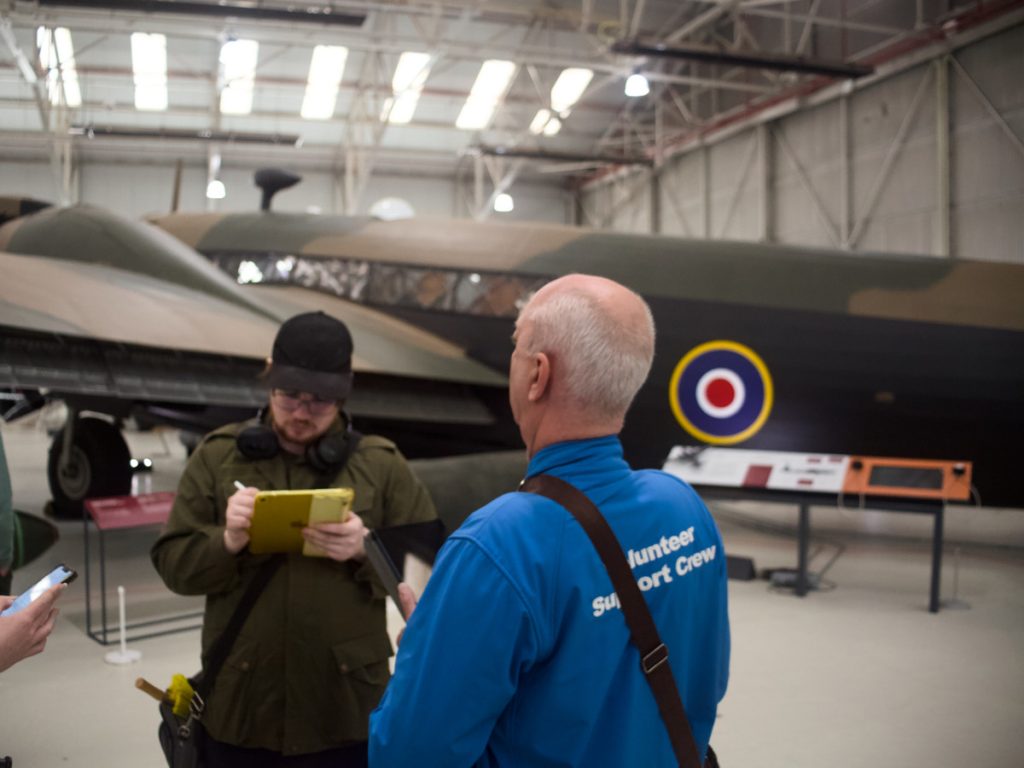
You’ll spend a day initially meeting and exploring what the project could look like, along with some interactive training to support your personal development, including employability skills. Then you’ll spend a day in the museum to uncover more information from the exhibits and take photographs and sketches that you can develop into your final piece.
You’ll then develop these into a collaborative colouring book to be distributed to children across Walsall and visitors to the musem. You’ll manage artistic creation, digital production, and research into printing and distribution.
Key Dates & Things To Know
You’ll need to be available for these dates:
- 21st May, 10am-3pm
- 22nd May 10am-4pm
- 11th June, 1-4pm
- 25th June 1-4pm
We’ll provide transport for the trip to the museum, and will cover any travel costs to make sure that you can get to and from the sessions, which will take place in Walsall Town Centre. This might be by covering the cost of bus tickets or paying for a taxi for you, or it might include providing lunch during sessions. We’ll discuss this with you when confirming your place.
Eligibility
This project is open to anybody who fits the following criteria:
- Aged 16-25
- Not in current education, full-time employment, or formal training (e.g. school, college, university), or facing other barriers to emplyoyment.
- Lives within Walsall or surrounding areas (WS1, WS2, WS3, WS4, WS5, WS6, WS8, WS9, WS10)
This project is made possble thanks to the RAF Museum Midlands Community Grants Programme
The first term of Foundry makes…
At the start of the year, our team made a few significant changes to our previous Foundry creative sessions with the aim of presenting a more exciting challenge for our young people who attend. Since April 2024, RicNic had delivered free after-school provision under our Foundry banner, with different classes for different age groups and a flexible programme covering a range of art forms. After reviewing how quickly participation had grown and consulting with our regular attendees, we identified that we needed to build more structure AND more exciting challenges into our plans.
This term, we launched our first ‘Foundry Makes’ projects across our sessions in Rushall and Bloxwich. Foundry Makes offer 10-week creative projects each term, each with a project brief, end goal target and RicNic’s unique youth-led approach. Participants can sign up for per term to take on each project. This term our Friday project was focused on the design and publication of a food-themed activity book. Funded by a grant from ‘Feeding Our Future’ project funding (via Walsall Council), the project saw 20 of our young people researching recipes, creating puzzles and games, designing characters and learning how to publish items using Canva.
They have created a 24 page activity and recipe book which is now being distributed to local families through Walsall’s Family Hubs.
Our Foundry Makes Makers have all loved the idea of seeing their own work in print, becoming authors, editors, artists and designers.
We have definitely sparked an early interest in graphic design in some of our youngest participants!
The next Foundry Makes theme is ‘Carnival’ and this will stretch across our two groups, with participants exploring performance, costume making, set design and more!
Registration is now open to anyone aged 5-16 years.
Walsall – How to Launch Your Own Creative Career
We’re delighted to be running another creative producing programme this summer from the 17-19th June, after the success of our past ‘Breaking In‘ sessions.
This three‑day programme will introduce you to the wide range of careers within the creative sector. We’ll explore what a creative job could look like for you, identify your ideas and ambitions, and learn how to bring those ambitions to life. You will also discover how the creative skills you already use can transfer into many other areas of life and work.
Open to anyone aged 14 – 25, the course will be tailored to your abilities, prior knowledge, and interests. Whether you’re drawn to design, media, writing, performance, or production, we’ll support you to kickstart your dream career or uncover what it could be.
During the placement, you will work alongside other young people and have the chance to meet and quiz industry professionals. RicNic will guide you through a series of sessions designed to develop your career aspirations and give you insight into the skills needed in the creative industries, exploring topics such as creative pathways, budgeting, event planning, marketing, and fundraising.
By the end of the week, you will create your own project and pitch it to a panel.
Sessions take place 10am-2pm (with lunch break) at The Table, Lower Hall Lane, Walsall, WS1 1RR
Burton – Creative Careers Work Experience 2026
For anyone in the West Midlands in years 10-12
Dreaming of a Creative Career? Whether you’re curious about design, media, writing, performance, or production, we’re here to help you kickstart your dream career or discover what it could be. After the success of our 2025 programme, we’ll be delivering a week-long work experience programme this summer from Monday 6th July – Friday 10th July in partnership with the Brewhouse Arts Centre.
During this placement, young people will work alongside each other, meet and quiz industry professionals and shadow members of the Brewhouse team. We’ll lead those on placement through a series of sessions that aim to develop career ambitions, whilst providing an insight into skills needed for the creative industries. Sessions will cover topics such as creative pathways, budget management, planning an event, marketing, and fundraising. At the end of the week, participants will create their own project and pitch this to a panel.
Interested in getting involved? Apply for your place here
Introducing RicNic’s New Programmes
Established by school students in 2004 as a summer project, RicNic has grown into a charity where young people are at the heart of everything; from shaping creative projects to taking leadership roles across the organisation.
Our core programmes provide regular opportunities for children, teenagers and young adults to be creative and produce their own events, products and small businesses. We promote youth leadership with tangible results, helping young people to develop their financial literacy, communication and understanding of the world.
Our vision is clear:
A world where every young person has the confidence, tools, and platforms to shape their communities through creativity and leadership.
Our New Programme Strands
Our new strands create a clear pathway for children, teenagers, and young adults to explore creativity, build confidence, and step into leadership.
Foundry
Aimed at under 16s, Foundry provides spaces for children and their families to explore creative skills with an end goal of creating events or products for their local community. This includes after-school young-enterprise style projects, free holiday clubs, and one-off workshops with visiting artists such as West-End performers.
Recent Foundry projects have included:
- Short plays
- Keyrings and badges
- A family recipe and activity book
- Workshops with cast members from Hamilton, Mary Poppins, and Aladdin
- Craft sessions contributing to Walsall MakerFest
FORGE – Skills, Mentoring & Creative Careers (16+)
Forge supports young adults as they explore creative industries and develop transferable skills for work and life. It includes:
- Associates – Practical group training for NEET young adults, culminating in a community event
- Breaking In – Employability sessions, networking, and masterclasses
- Creative Industry Coaching – 1‑1 support for those leaving school, college, or university
- Creative Mentoring – Building confidence, ambition, and direction through creative engagement
FLOURISH – Workshops for Schools, Businesses & Communities
Our Flourish programme offers a creative arts approach for young people to engage in independent thinking, social enterprise, youth leadership, socialisation and life-long learning, and to develop their sense of self, wellbeing, and sense of hope.
This flexible programme caters for targeted groups including but not exclusive to
- Early Years families
- SEND young people
- Home schooled pupils
- Young Carers
- Care experienced young people
- Disengaged young people
Why This Matters
RicNic’s impact goes far beyond creative output. Young people tell us that RicNic is:
- A place to express themselves and try new ideas
- A friendly, welcoming space where they feel supported
- A safe environment to make friends and build confidence
We also offer paid roles, work experience, and trustee opportunities—because young people deserve real responsibility and real investment.
As one participant put it:
“Coming to RicNic just makes me feel happy!”
Find out more about what we do or Get In Touch
How RicNic’s Creative Careers Coaching Helps Young Creatives Get Unstuck
If you’ve ever felt lost, overwhelmed, or simply unsure about your next steps in the creative industries, you’re not alone, and you’re exactly who RicNic Chats is designed for.
Creative career paths rarely follow a straight line. They veer off course, go off on tangents, and next steps often aren’t obvious. That’s why we created RicNic Chats; affordable, friendly, one-to-one coaching sessions for 16–25-year-olds navigating their next steps. Whether you’re applying for drama school, considering roles in fashion, exploring a freelance career as a designer, looking to publish your first novel, or simply trying to figure out what jobs actually exist, our mentors are here to help you breathe, focus, and move forward across the creative industries.
After completing a mentoring session:
- 90% of participants rated the session “useful” or “very useful”.
- Average confidence in career plans jumped from 2.3/5 to 3.55/5.
For a single, free 30–45 minute chat, that’s a huge impact, and exactly why we run this programme.
What Participants Found Most Valuable
Every participant brings a different challenge, and every session is tailored to the individual. Here’s what young creatives told us they valued most
- Creative portfolio advice
- Learning practical techniques—networking, tailoring CVs, improving applications
- Getting industry insights from someone who knows what works
- Discovering new organisations and how to craft a strong cover letter
- Thinking ahead and planning realistic career steps
- Simply having someone to talk through worries and uncertainties
- Helpful follow-up links and support connections
- Clear next steps broken down into small, manageable actions
Why It Works
Our Creative Careers Mentoring is built around three principles:
1. Personalised, real-world guidance
Every mentor works actively within the creative industries; from theatre and design to producing and technical roles. They bring lived experience, current knowledge, and practical advice, and contacts across the UK.
2. Time to reflect and plan
Sometimes, the hardest part is figuring out the first step. Your mentor helps you break big ambitions into manageable actions.
3. Follow-up resources
Every session includes links, contacts, suggestions, and next steps so you can keep moving after the chat ends.
Ready to Get Unstuck?
Whether you’re trying to break into the creative world, make sense of your options, or simply want someone to talk things through with, RicNic is here for you.
From 2026, sessions will cost £10 for a 30–45 minute chat, including follow-up resources and signposting. This helps us cover our costs, but we don’t want payment to be a barrier to access.
Sessions are free for:
- Anyone aged under 18
- Anyone for whom the cost would be a barrier
- Anyone based in Walsall, Burton upon Trent, or surrounding areas
Find out more and book your chat
Choosing the Right Business Structure
If you’re setting up your own business or getting started as a freelancer, your organisation’s legal structure will be one of the first decisions you have to make. Below, we summarise the most common UK structures and highlight practical implications for funding applications.
This information is not intended to act as financial or legal advice, please do your own research and consult with professionals if you have any questions.
1. Sole Trader
A sole trader is the simplest structure: you and the business are legally the same.
Best for: Freelancers, creatives, sole self-employed individuals.
Funding eligibility:
- Not usually eligible for grants.
- Can access personal finance, start-up loans, and some business support schemes.
- Funders may see sole traders as higher risk due to personal liability.
Pros: Easy setup, minimal admin.
Cons: Limited funding options, personal liability.
2. Limited Company (Ltd)
A limited company is a separate legal entity registered with Companies House.
Best for: Growing small businesses, start-ups, agencies, product or service companies.
Funding eligibility:
- Eligible for business loans, equity investment, and innovation funding (e.g., Innovate UK).
- Rarely eligible for charitable grants unless partnered with a nonprofit.
- Favoured by investors due to structure and liability protection.
Pros: Credibility, limited liability, scalable.
Cons: More reporting and compliance.
3. Partnership / Limited Liability Partnership (LLP)
A partnership involves two or more individuals running a business together; LLPs offer more legal protection.
Best for: Joint ventures, creative partnerships, small professional groups.
Funding eligibility:
- Not commonly eligible for grants.
- Can access certain loans or investment.
- Funders often require a clear partnership agreement.
Pros: Shared responsibility, flexible.
Cons: Limited funding options; liability depends on structure.
4. Community Interest Company (CIC)
A CIC is a social enterprise structure designed for organisations that trade commercially while delivering community impact.
Best for: Social impact ventures, creative community projects, wellbeing and youth organisations.
Funding eligibility:
- Eligible for social investment, community funding, and some grants.
- Not eligible for all charitable grants, but many funders accept CICs due to the asset lock.
- CIC Limited by Guarantee is generally better for grant funding than CIC Limited by Shares.
Pros: Recognised purpose, ability to trade, transparent governance.
Cons: Asset lock limits profit distribution.
5. Registered Charity
Charities exist exclusively for charitable purposes and follow strict governance rules.
Best for: Organisations focused on public benefit, education, arts, community services, or social wellbeing.
Funding eligibility:
- Eligible for the widest range of grants (National Lottery, Arts Council England, Trusts & Foundations).
- Can receive donations, fundraising income, legacies, and Gift Aid.
- Trusted by funders and the public.
Pros: Strong funding opportunities, high public trust, tax benefits.
Cons: Complex governance, strict regulations, limited trading activity.
6. Charitable Incorporated Organisation (CIO)
A CIO is a modern charitable structure with incorporated status.
Best for: New charities and community organisations that want limited liability without running both a charity and a company.
Funding eligibility:
- Fully eligible for charitable grants.
- Growing in popularity among funders due to streamlined reporting.
- Trustees have improved liability protection.
Pros: Simple governance, strong funding access, flexible charity structure.
Cons: Registration can be slower; must meet charity rules.
7. Unincorporated Association
A simple, informal nonprofit structure with no separate legal personality.
Best for: Grassroots groups, early-stage community initiatives, volunteer-led groups.
Funding eligibility:
- Eligible for some local authority or small community grants.
- Not eligible for most large-scale grants due to lack of legal status.
- Cannot employ staff or enter major contracts.
Pros: Easy to form, no cost.
Cons: Limited funding, personal liability for committee members.
Which Structure Is Best for Funding?
Best for Grant Funding
- Registered Charity
- Charitable Incorporated Organisation (CIO)
- CIC Limited by Guarantee
Best for Investment & For-profit Trading
- Limited Company
Best for Freelancers & Early Stages
- Sole Trader
- Partnership
Conclusion
Your organisation’s legal structure directly influences the type of funding you can apply for and how funders perceive your stability and credibility. Whether you’re starting a creative business, launching a community initiative, or setting up a social enterprise, choosing the right structure early on can save time and open more opportunities later.
If you’re planning to seek grants, a CIO, charity, or CIC can give you the strongest foundation. If you’re aiming for commercial growth or investment, a limited company is often the best fit.
For more information, book a chat with us!
How to Write a Cover Letter: Telling Your Story with Purpose
Applying for roles in the creative industries; whether in film, design, publishing, theatre, advertising, gaming, or the arts, often means competing with people who are just as talented and enthusiastic as you. A great portfolio or CV is essential, but there’s one document that can shift the balance in your favour: a well-crafted cover letter.
In any sector, but especially the creative-industries, a cover letter isn’t just a formality; it’s your first opportunity to demonstrate your voice, your values, and your creative thinking. It’s also where you connect the dots between your experience, the role, and the organisation’s mission. Here’s how to write one that stands out for the right reasons.
Start with the Job Pack
In creative work, responding to a brief is half the job. In this case, the job pack (or job description) is your brief.
Before you write anything, break down the job pack into three key areas:
- What the role requires (skills, knowledge, responsibilities)
- The organisation’s history, impact, and values (their tone, mission, creative style)
- What the organisation is trying to achieve (projects, audiences, challenges)
Make a shortlist of the skills and experiences you have that correspond with each area. This becomes the spine of your cover letter. Being explicit about how you meet the brief shows that you understand the assignment and can translate it into clear, purposeful writing; an essential skill in almost every creative job.
Complete a Creative Skills Audit to help with this step for future cover letters.
Tailor Your Skills and Experience, don’t Just List Them
Rather than just listing your skills, a cover letter is your chance to elaborate. Shout about your achievements, and provide evidence of how you’ve used each skill or context about how you’ve developed it. Be as specific as possible; this all helps to build the recruiter’s trust in your ability to do the job.
Instead of:
“I have strong communication skills.”
Try something like:
“In my role as a production assistant, I coordinated weekly cross-department meetings, translating technical updates into exactly what staff and crew members needed to know each day; an approach that strengthened collaboration and helped the project stay on schedule.”
This turns a generic skill into a concrete example, giving your reader a story rather than a statement. It also subtly demonstrates problem-solving, teamwork, and clarity; all highly desirable in creative settings.
Show Your Transferable Skills (They Matter More Than You Think)
Creative industries often attract candidates from diverse backgrounds. Even if you’re pivoting from a different sector—or you’re early in your career—your transferable skills are far more relevant than you might realise.
Think about the core competencies creative teams rely on:
- Resourcefulness
- Organisation
- Collaboration
- Critical thinking
- Storytelling
- Adaptability
- Empathy
You can have gained these from hospitality, retail, volunteering, education, admin work, side projects, or hobbies. What matters is how you connect those experiences to the job pack.
For example:
“Working in a Front Of House role at The Little Theatre taught me how to stay calm under pressure and problem-solve in real time, working to balance customer safety and ensuring that the show could commence on time. These are skills I’d bring to the fast-moving environment of a live production team for Beacon Festival.”
Transferability isn’t about stretching the truth; it’s about recognising the value of what you’ve already done.
Explain Why You Want This Job (Not Just Any Creative Job)
One of the biggest missed opportunities in cover letters is vague enthusiasm:
“I’ve always wanted to work in the creative industries.”
Instead, be specific. Think of this section as a pitch that answers:
- What about this organisation excites you?
- What creative values do you share with them?
- Why do you want to contribute to these projects?
- How does this role fit into your creative journey?
Maybe you admire their storytelling approach, their audience focus, their bold design language, or their commitment to a particular mission. Maybe the role gives you the chance to build skills you’ve been developing independently. Show them this opportunity isn’t random; it’s intentional.
A practical note:
If any logistical details aren’t readily apparent from your CV, be sure to list them in the cover letter (and in the initial application form/email). E.g. if your CV shows only Manchester experience but you’re looking to relocate to Leeds, make sure you specify this. Otherwise, a recruiter might think you just haven’t read the job pack properly.
Articulate What You Hope to Learn
Creative industries value growth. They know that curiosity drives great work.
When you express what you hope to learn, you’re showing:
- Self-awareness
- Drive
- Teachability
- A long-term investment in the field
For example:
“I’m eager to deepen my experience in editorial writing, especially in shaping content for young audiences; an area your team excels in and one I’m excited to learn from.”
This positions you as someone who will both contribute and evolve, which is compelling for employers.
Talk About Your ‘Why’: The Creative Spark Behind the CV
Here’s where many cover letters fall flat: they tell an employer what someone has done, but not why they create in the first place.
Your “why” is your creative identity. It’s the emotional centre of your letter.
Ask yourself:
- What motivates me to make things?
- What themes, values, or ideas run through my work?
- Why do I choose this medium, this industry, this audience?
- What do I want my creative contribution to be?
Then weave it into a short, authentic insight. For example:
“Storytelling has always been how I make sense of the world; whether through short films, community projects, or the way I visually document everyday moments. I’m drawn to work that helps people feel seen, understood, or inspired.”
This isn’t a bio; it’s a glimpse into who you are as a creative person. Employers aren’t just hiring skills; they’re hiring people who have emotions and interests.
Offer Enough Personal Insight—But Keep It Relevant
Creative industry cover letters allow more personality than corporate ones, but balance is crucial.
A few tips:
- Share personal experiences only if they relate to the role or your creative motivation.
- Show passion without oversharing.
- Use a friendly, human tone; but maintain professionalism.
- Let your creative mindset shine through your word choices and structure, not gimmicks.
A good cover letter feels like a conversation where the reader gets a sense of both your competence and your character.
In Summary:
Your Cover Letter is a Story About You + the Role. A strong creative-industry cover letter answers three big questions:
- Can you do the job? — skills, examples, transferable experience
- Do you understand this job? — tailored responses to the job pack
- Who are you as a creative person? — your values, your “why,” your ambitions
When these come together, the result is a cover letter that is personalised and showcases the best of you.
A Beginner’s Guide to Funding Applications
If you’re an early-career creative, getting your first bit of funding can feel impossible. You’ve got the ideas, the passion, and potentially some experience behind you from school, university, or other training. But now you’re ready to take the next step and need some financial support to do it.
This guide is here to help you understand where to look for small grants, how to write about your work confidently, and how to make your first funding application feel achievable rather than overwhelming.
What Is Creative Funding and Who Is It For?
Funding is money given to help creative people make or develop their work. It’s not a loan — you don’t have to pay it back — but you do need to show how you’ll use it and what it will achieve.
Small grants (usually under £1,000) are designed to help early-career artists get started. They might cover:
- Materials or equipment
- Studio space or rehearsal costs
- Fees to pay yourself or collaborators
- Workshops or community activities
- Travel to attend training, exhibitions, or residencies
You don’t need to have a long CV or previous grant success. Funders want to support potential, creativity, and enthusiasm as much as experience.
Types of Grants
There are more opportunities out there than you might think. Funding within the creative sector is usually split into one of the below categories:
Community Benefit – Creative projects that support the wider development of people and communities primarily, e.g. an art workshop which encourages confidence in participants. These are funds where the outcomes of participants are prioritised over the physical work created, and they are often run at a grassroots level within the local community.
Creation of Works – Focussed on funding the creation of new material and/or outputs; e.g. a new theatre production, piece of music, or wardrobe of clothing. These will usually cover your time, materials, and ‘overheads’ (the cost of keeping the lights on). Some funds may require a specific sharing of the work created (e.g. an exhibition, album release).
Personal Development – These are funds which support the development of creative people, rather than the creation of new art. This could include opportunities to go and see work locally, meet other people working in a similar area, travel internationally to learn from other cultures, or just take time to think.
Entrepreneurship/Business Startup – These are funds designed to support you to setup a business in your chosen field, with a view to that business turning a profit. In some cases, these are limited to social enterprises (businesses which work for the benefit of the community).
Some funds are only open to registered charities, some accept applications from Commmunity Interest Companies, and others will accept applications from indviduals. Make sure you are eligible for funding from an organisation before taking the time to apply.
Where to Find Small Grants in the UK
There are a number of grants and funding sources, but these can sometimes be hard to find. Search the internet for funding in your chosen discipline or local area, and more nationally, and make a note of application deadlines or previous projects organisations have funded. There are a number of grant guides available online, such as from The Kings’ Trust, Culture, Health and Wellbeing Alliance, Creative Lives, and many more places.
You could also look at what projects have run that are similar to yours, and where these obtained their funding (often printed somewhere or listed on a website).
Telling Your Story in an Application
A funding application is simply a way of telling someone why your idea matters and what difference it will make. You don’t need fancy language; just honesty, clarity, and enthusiasm.
Here’s how to approach it:
- Start with why: What sparked this idea? Why does it matter to you, and why now?
- Be clear about what you’ll do: Describe your project in as much detail as possible. What will happen, where, and when? Don’t be afraid of bullet points where appropriate.
- Explain the impact: What do you hope will come from it? Maybe you’ll reach new audiences, learn a new skill, or bring people together through creativity.
- Share your story: Funders like to know who they’re supporting. Talk briefly about your background, what inspires you, and what this opportunity would mean for you.
Try writing your answers as if you’re explaining your project to a friend who doesn’t know much about your work; don’t assume any prior knowledge about the project or who you are. Once you’ve done that, tidy it up and make it sound professional, but don’t lose your personal voice.
Using AI
Be cautious when using AI to write an application. The use of AI in writing can be obvious, and it can limit your application’s ability to stand out against the competition. AI can help with condensing ideas or proofreading, but don’t use it to write the actual application. Make sure it stays authentic and unique to you, rather than generic-sounding. And make sure that everything that you submit is accurate; AI can sometimes get it wrong or hallucinate data and information.
Using Evidence and Data (Without Getting Overwhelmed)
You don’t need lots of statistics for small grants, but it helps to show that you’ve thought things through to include some.
You should include:
- How many people you expect to reach or work with
- Any feedback or interest you’ve already had (for example, people saying they’d come to an event or take part in workshops)
- Local facts or figures that show there’s a need for what you’re doing (for example, a lack of creative opportunities for young people in your area)
- A simple budget that shows what the money will be spent on
A clear, realistic budget is one of the most important parts. Funders want to see that you’ve planned carefully and that your project is achievable.
Tips for Your First Application
Here are some practical tips that can make a big difference:
- Read the guidelines carefully before you start. Each funder is slightly different. Make sure that your application is actaully eligible.
- Keep it short and focused. For small grants, funders don’t expect long proposals.
- Be specific. “I want to create a short film about local history” is clearer than “I want to make creative work about identity.”
- Show what success looks like. What will you have achieved by the end of the project?
- Ask for help. Many funders will review a draft or answer questions before you apply.
- Don’t be put off by rejection. Even experienced artists get turned down sometimes. Each application is a learning experience.
Building Confidence for the Future
Your first funding application might take time, but it gets easier with practice. Keep notes of what you’ve applied for, the feedback you get, and what you’d change next time.
Small grants can be a stepping stone towards bigger opportunities. They show funders that you can manage money, deliver a project, and reflect on what you’ve learned. Over time, this builds trust and opens more doors.
Remember: funders aren’t looking for perfection. They’re looking for creative people with good ideas who want to make something meaningful happen. That could be you.
Final Thoughts
Applying for funding for the first time can feel daunting, but it’s also exciting. It’s a chance to get your ideas out of your head and into the world.
Start small, be honest about what you need, and don’t be afraid to ask questions along the way. Every successful project (even the big ones) started somewhere.
You’ve already done the hardest part by creating something worth sharing. Now it’s about giving yourself the chance to make it happen.
Looking Back at The Big Walsall Waddle
In August 2025, 21 giant rubber ducks took over Walsall to mark RicNic’s 21st birthday. Hosted across parks, libraries, community hubs and public spaces across Walsall, each duck was designed and decorated by a local group, organisation or business, transforming the town into an open‑air gallery that families could explore throughout the summer.
The project was made possible through the support of partners across Walsall. The Canal & River Trust came on board as headline sponsor, helping to highlight the borough’s rich canal heritage and the communities that live alongside it, with a variety of local organisations hosting ducks in libraries, leisure centres and other public venues to ensure the trail was accessible to families in every corner of the borough.
Every sculpture had its own story, brought to life by the groups who designed them. Some of the summer’s favourites included:
- F(eathe)red Astaire, RicNic’s own theatrical superstar, celebrating two decades of youth‑led creativity.
- Dizzy D, created by The Getting Fit Company, championing movement and wellbeing.
- Diversity Duck, proudly representing inclusion and positivity in Willenhall
- Ozzy, a rock‑inspired creation from the Walsall Wheelbarrow Company’s fourth generation.
- Flora, the Family Hubs duck, who became a familiar face at early‑years activities.
Alongside the trail, a number of pop-up activities took place: children were invited to design their own duck or write a duck‑themed story; duck-decorating workshops took place; and we held a raft day in Walsall Arboretum. This culminated in a celebration of the project, with all the ducks displayed at Walsall MakerFest and the winning ducks announced.
Find out more about The Big Walsall Waddle